Indian Rummy Game: Rules, Card Combinations and How to Play
Why Rummy Is So Popular in India
Rummy has a familiar place in India’s card-playing culture, enjoyed in social settings and family gatherings as well as through digital card games. Its appeal comes from a simple idea: players draw and discard cards while trying to organise their hands into valid combinations. Although the basic objective is easy to understand, deciding which cards to keep, which to discard, and how to complete a hand makes each round a different challenge.
The Indian Rummy game commonly uses a 13-card format. Players aim to arrange their cards into sequences and sets, following the rules of the particular game. Unlike games that focus mainly on comparing individual cards, rummy requires players to build combinations across the entire hand. A useful card may complete a sequence, while an unsuitable discard could help an opponent finish theirs.
Online versions have made it possible to learn the game through mobile interfaces, practice modes, and digital tables. However, different apps may offer different formats, scoring systems, or house rules. A beginner should understand the standard principles first, then check the instructions for the specific version before playing. This is more useful than assuming that every Indian Rummy App follows precisely the same rules.
Indian Rummy Rules: Understanding Sequences and Sets
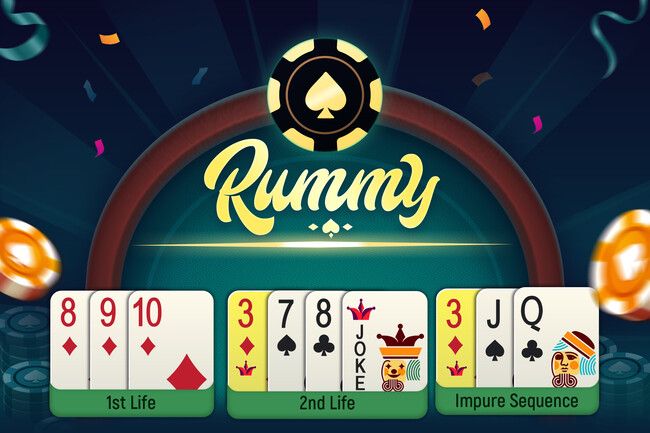
The most important part of learning Rummy India rules is understanding how sequences and sets differ. A sequence consists of three or more consecutive cards of the same suit. For example, the 4, 5, and 6 of hearts form a sequence because the cards follow one another in rank and share the same suit. A sequence that uses no joker as a substitute is called a pure sequence, while one that uses a joker to replace a missing card is generally called an impure sequence.
A set is made up of cards of the same rank but different suits. For example, the 8 of hearts, 8 of diamonds, and 8 of clubs can form a valid set. Jokers may also be used to complete combinations where the rules permit them. The distinction is important: three consecutive cards of different suits do not form a standard sequence, and duplicate suits may prevent a group of equal-ranked cards from qualifying as a valid set.
In the common 13-card Indian Rummy game format, a valid declaration normally requires at least two sequences, including at least one pure sequence. The remaining cards must be arranged into valid sequences or sets so that the entire hand is accounted for. A hand that contains several attractive combinations but lacks a pure sequence is not normally a valid winning hand. Because individual platforms may apply variations, players should check the rules before declaring.
How to Play Rummy Step by Step
A typical game begins with each player receiving 13 cards from a shuffled deck. A card is revealed to establish the discard pile, while the remaining cards form the face-down draw pile. Depending on the format, a card or rank is designated as a joker, which can substitute for another card in eligible combinations. The exact setup may vary with the number of players and the particular version being played.
On each turn, a player draws one card from either the face-down pile or the top of the discard pile. After reviewing the hand, the player discards one card to complete the turn. This repeated process allows players to improve their combinations while trying to avoid giving opponents a useful card. Choosing which pile to draw from is important because the visible discard pile provides information about cards that other players have decided not to keep.
The objective is to complete a valid arrangement and declare according to the game’s rules. Before doing so, check that the hand includes the required pure sequence, the additional sequence or sequences, and valid combinations for the remaining cards. An incorrect declaration may result in a penalty under the relevant scoring system. Taking a moment to review the hand before declaring can prevent mistakes, particularly when jokers are involved.
Rummy Scoring: How Points Are Calculated
In point-based Indian Rummy, scoring generally focuses on the cards left unmatched when another player makes a valid declaration. Face cards such as Kings, Queens, and Jacks commonly carry 10 points each. Aces are also often valued at 10 points, while number cards usually count according to their face values. Jokers generally carry no penalty points when used under the applicable rules.
The purpose of this system is to reward players who complete their hands while limiting the penalty attached to unmatched cards. For example, holding an ungrouped King, Queen, and 7 could produce a total of 27 points under a common scoring scheme. The actual penalty depends on the cards left outside valid combinations and the rules of the specific game.
Some formats cap the maximum penalty for a hand, while others apply different rules for dropping, declaring, or special situations. Pool Rummy and Deals Rummy also use different match structures, so their overall scoring should not be confused with the points counted in an individual hand. Players should review the scoring instructions before starting rather than assuming that every table uses the same limit.
Practical Tips for Improving Your Rummy Game
For beginners, forming a pure sequence early is a sensible priority. It satisfies an essential requirement for a valid declaration and helps clarify how the remaining cards can be arranged. Once a useful sequence begins to take shape, players can focus on completing another sequence and organising the rest of their hand into valid sets or runs.
Discard decisions deserve equal attention. A card that does not fit the current hand may be worth keeping if it could complete a promising combination, but holding too many unrelated cards can make progress difficult. High-value cards that have little connection to existing combinations may increase the potential penalty if the round ends before they can be used. Their value should be assessed in context rather than discarded automatically.
Jokers can help complete combinations, but using one too quickly may waste an opportunity to improve the hand. Consider whether a natural card could complete the same sequence or whether the joker would be more useful elsewhere. It is also helpful to remember which cards have appeared in the discard pile. That information cannot reveal every opponent’s hand, but it can help you make more informed decisions about which combinations remain practical.
Finally, avoid treating any particular strategy as a guaranteed route to victory. The cards are dealt randomly, and an opponent may complete a hand sooner than expected. Good decisions can improve how efficiently you manage your cards, but they cannot remove uncertainty from the game. Practice, patience, and a clear understanding of the rules are more useful than chasing a supposed winning formula.
Choosing an Indian Rummy App for Online Play
An Indian Rummy game App can provide a convenient way to learn the rules and play digital versions of the game. Before choosing one, check which format it offers, whether practice play is available, and whether the instructions clearly explain sequences, sets, jokers, and scoring. A well-documented casual game can be a useful starting point for beginners who want to understand the mechanics without the pressure of a competitive environment.
It is also important to review the app’s publisher, privacy information, requested permissions, and update history. If an application is offered as an APK outside a recognised app store, verify the source and package details before installing it. A familiar name or an attractive interface does not establish that an app is genuine, secure, or supported by its claimed developer.
India’s regulatory environment also needs to be considered when evaluating online gaming services. The Promotion and Regulation of Online Gaming Act, 2025, and the related rules took effect on 1 May 2026. The national framework prohibits online money games, whether based on skill, chance, or a combination of both, and also addresses their promotion and associated financial transactions. Players should therefore distinguish casual games that use non-transferable virtual points from services involving monetary stakes or winnings. A game’s classification should not be inferred solely from the word rummy or from promotional claims.
Frequently Asked Questions About Indian Rummy game
What is the main objective of Indian Rummy game?
The objective in the common 13-card format is to arrange all cards into valid sequences and sets, including at least one pure sequence and the required additional sequence. A player must satisfy the game’s declaration rules for the hand to count as valid.
What is the difference between a pure sequence and an impure sequence?
A pure sequence contains consecutive cards of the same suit without using a joker as a substitute. An impure sequence also contains consecutive ranks of the same suit, but a joker can replace a missing card. The precise treatment of jokers depends on the rules of the version being played.
Can a player win Indian Rummy game without a pure sequence?
Under the standard 13-card rules, a pure sequence is mandatory for a valid declaration. Even if the remaining cards form sets and other sequences, a hand without a pure sequence does not normally qualify as a valid winning hand.
How are points counted in Indian Rummy game?
Unmatched cards generally contribute to a player’s penalty score after another player declares. Face cards and Aces commonly count as 10 points, number cards carry their face values, and jokers usually carry zero points. Specific caps and other scoring conditions depend on the format.
Is online Rummy the same as traditional Rummy?
The underlying card combinations are often similar, but digital versions may differ in their interface, table structure, scoring, and house rules. Players should read the instructions for the specific game before starting.
Final Thoughts on the Indian Rummy Game
The Indian Rummy game combines card organisation with decisions about drawing, discarding, and managing incomplete combinations. Its rules become easier to follow once players understand the difference between sequences and sets, know why a pure sequence matters, and can calculate the potential penalty from unmatched cards. These fundamentals provide a sound starting point for both casual practice and learning different Rummy formats.
If you are learning how to play rummy, focus first on making valid combinations and understanding the scoring system. When selecting an app, check its rules, publisher information, and privacy details, and make sure its features suit your intended use. A clear understanding of the game is more valuable than relying on promises of easy wins, and anyone in India considering an online gaming service should also take the current legal framework into account.